Spring Tree Health Checklist for Homeowners in Corvallis
Quick Summary:
- Use a spring tree health checklist in Corvallis to spot issues like root rot, weak limbs, and disease before summer storms cause costly damage.
- Check for signs of root rot after rainy Oregon winters, including trunk discoloration, mushrooms at the base, stunted growth, and thinning canopies.
- Inspect Douglas Fir trees for yellowing needles and thinning crowns, which could signal Swiss needle cast (SNC) fungal disease.
- Look for weak or broken limbs, especially after ice or snow, and watch for peeling bark, vertical cracks, or branches hanging loosely.
- Examine tree trunks for cankers—discolored splotches or oozing sap—which may indicate anthracnose, a serious fungal infection for maples, oaks, walnuts, and sycamores.
- Annual tree inspections by a TRAQ-qualified, ISA-certified arborist help catch hidden risks, create a custom treatment plan, and keep your property safe.
- Corvallis Tree Care offers comprehensive, mess-free inspections and follow-up visits to ensure your trees stay healthy year-round.
- Book your spring tree health inspection with Corvallis Tree Care to protect your home, family, and landscape from preventable tree hazards.
Spring Tree Health Checklist for Homeowners in Corvallis
You’ve probably begun your annual spring cleaning, but have you inspected your trees for damage? Homeowners in Corvallis should book their ISA-certified arborist appointments after winter visibility obstacles have cleared, but before summer storms hit. This is the best way to stop tree health issues from becoming catastrophes, but you can start checking for damage yourself before your official inspection.
If you’re eager to see how your trees are holding up, print out this checklist of what to look for. After you’ve looked for damage yourself, book an inspection with Corvallis Tree Care to confirm your findings.
Look for Rotting Roots
Start your yard walk-through from the ground up. Since Corvallis has such rainy winters, it’s not surprising that our soil can become waterlogged. This deprives trees of oxygen, leading to what we call “root rot.” This is one of a few common tree diseases we see in Oregon, and it’s one that you should be on the lookout for.
Damage to your roots can be hard to spot, but it can cause devastating damage if it weakens a tree’s foundation. Root rot presents in a few different ways, and some of the signs can be confused with other types of damage or even normal seasonal changes.
First, check the base of each tree’s trunk for discoloration. If they’re turning black, make note of it. Then, check for mushrooms. Fungal growths around a tree’s base can indicate Armillaria root rot. Other signs of root damage include stunted growth and thinning canopies. Any symptoms of root rot warrant a call to a TRAQ-qualified arborist so they can recommend solutions.
Check for Yellow Needles on Douglas Fir Trees
If your Douglas Fir is balding and its needles are turning yellow, it may be suffering from Swiss needle cast (SNC). This tree disease is more common on the coast than in Corvallis, but a particularly mild winter could cause it to happen here as well.
There has been an increase in SNC-related damage to Oregon trees since the 1980s, and surveys are conducted each year to evaluate how bad it’s gotten. The best way to prevent this fungus is to ensure your Douglas fir can easily dry after rain. That involves spacing your trees out and choosing moist, yet drainable spots when you plant them. If your trees' needles are already yellowing or shedding at their crowns, there are some treatments available to stop the fungus from spreading further.
Identify Weak Limbs
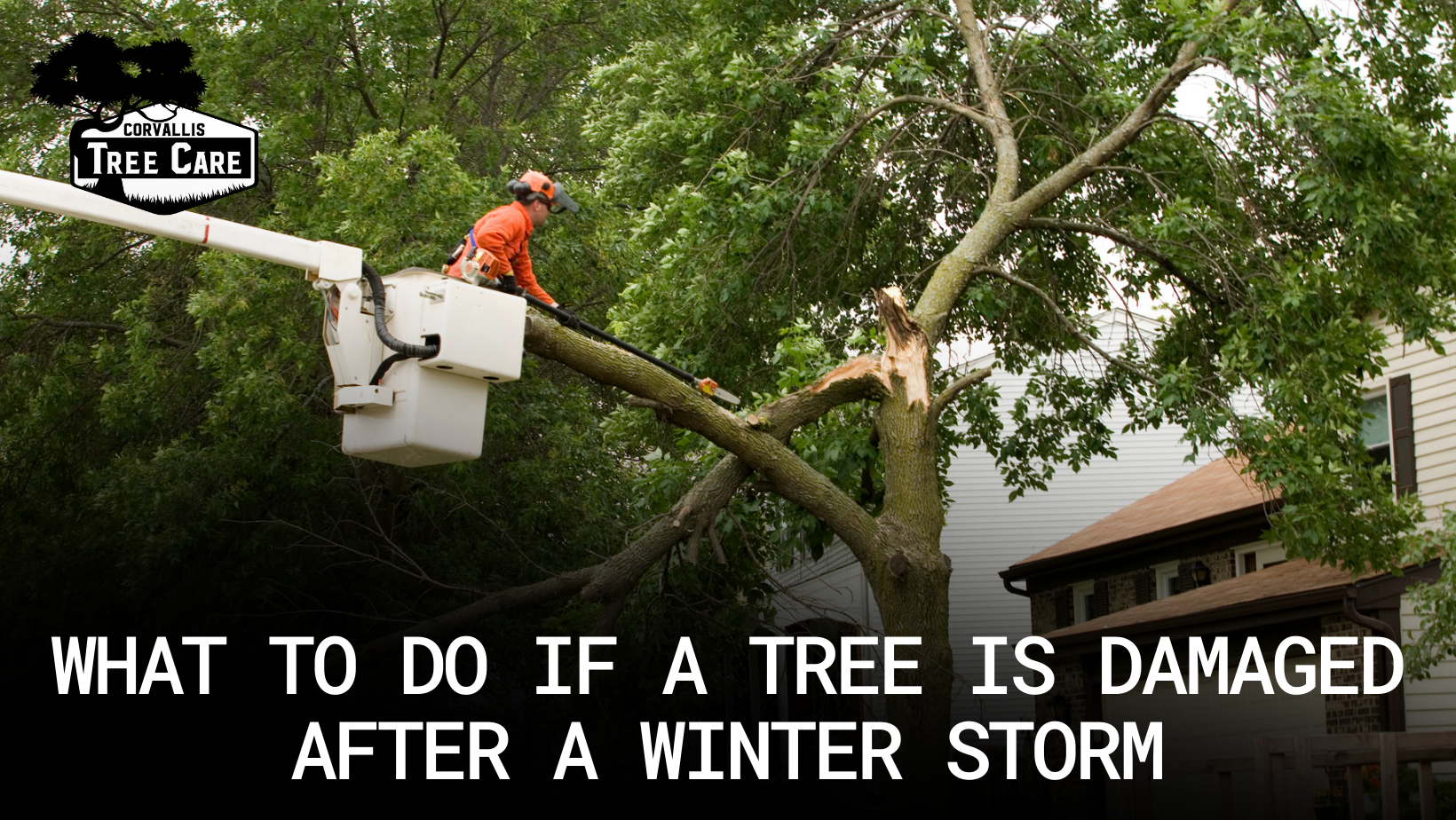
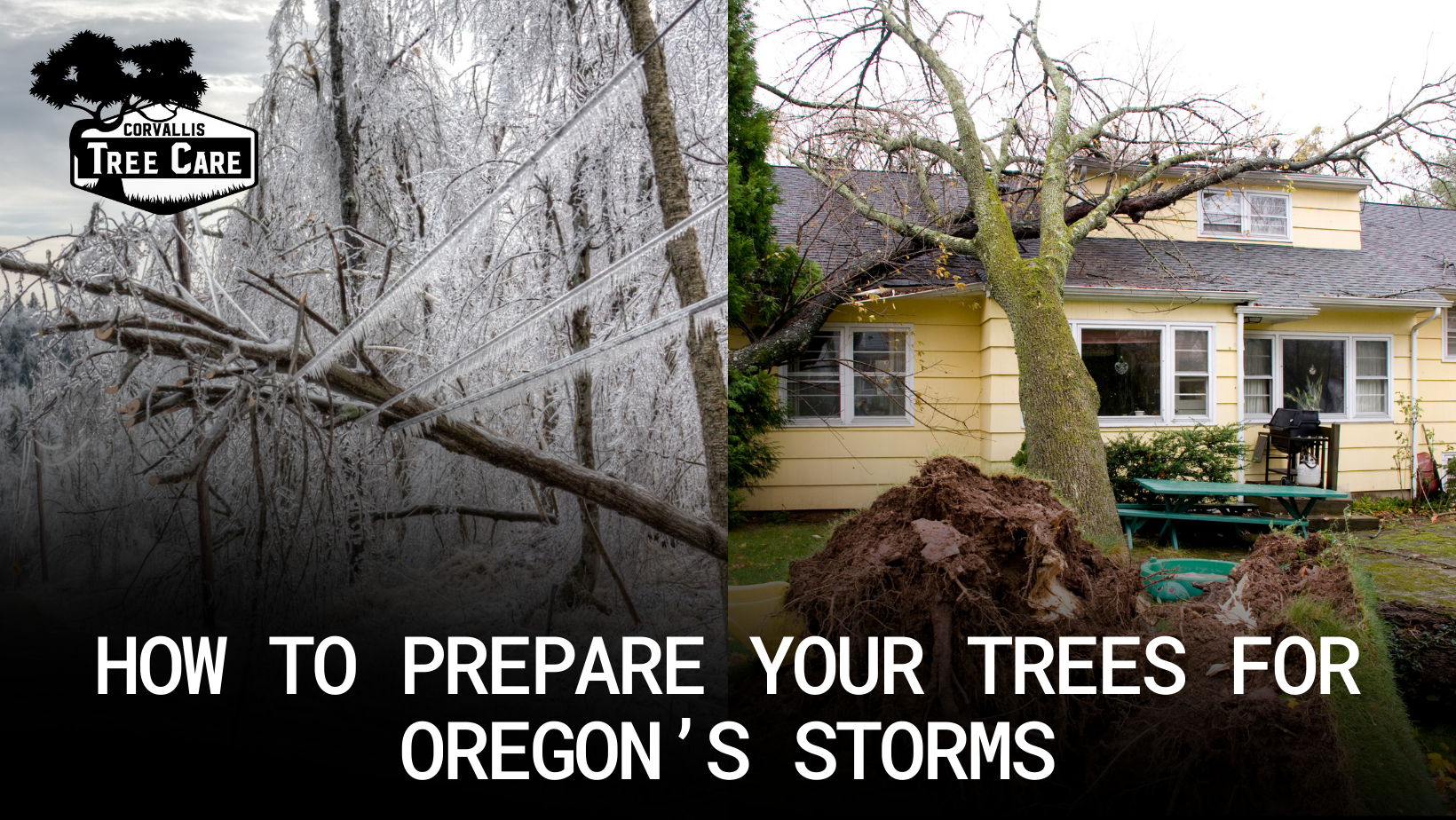
Your spring tree care in Corvallis should include a thorough limb inspection, especially during colder or snowier winters. When ice or snow accumulates on top of tree limbs, that extra weight can cause them to snap. All it takes is one windy day to cause significant property damage from them falling onto whatever’s below them.
Signs of weakened limbs include peeling bark and vertical cracks. You might also notice more noticeable damage, like broken branches being held up by surviving ones. Any of these red flags is an indication that you need a prompt arborist inspection this spring to remove anything hazardous.
Look for Cankers on Tree Trunks
Like humans, trees can get cankers. Unlike in humans, these splotches are deadly to trees. They’re caused by Anthracnose, a fungus that infects maple, oak, walnut, and sycamore trees in Oregon. Tree damage from Anthracnose is most likely to occur during winter, since hot and dry weather halts the spread. This means you should be checking for cankers every spring.
Cankers look like discolored splotches on tree trunks. They might ooze discolored sap or grow fruit-like plants from the damaged spot. Without treatment, anthracnose will lead to tree death, so make sure your ISA-certified arborist comes to your Corvallis property to investigate.
Once you have a good idea of what might need to be further looked at, call a TRAQ-qualified arborist to do a proper inspection. This will confirm any suspicions you may have, and it could uncover more issues you might have missed. In the best-case scenario, you’ll have reassurance from a professional that nothing alarming can threaten your house or family.
While you should be surveying your trees for damage after any storm, having a yearly inspection can add a safeguard in case you forget a post-storm walkthrough. Think of arborist services like going to the doctor. You probably go to the doctor when you have symptoms that need to be treated, but you’re also encouraged to visit once a year. That annual visit is to confirm there’s nothing ominous brewing that could threaten your health. Even if you feel fine, your provider will run tests to be safe. Your annual tree risk assessments are their “wellness checks,” where issues that homeowners missed are often uncovered.
What to Expect During Tree Risk Assessments
During a tree inspection with Corvallis Tree Care, we’ll first evaluate the health and strength of your trees. We look for hazards, like breakage and diseases. Then, we’ll customize a treatment plan for your property. These recommendations may include bracing and cabling, pruning, and pest control, depending on what we find.
After any work we perform, we make sure there are no messes left behind. Debris can be dangerous, so we’ll pick up anything you or your family can trip over. Lastly, we’ll follow up with you to see how your trees are holding up. We can even visit again in person to make sure none of your tree issues have returned.
ISA-Certified Arborists in Corvallis, Oregon
When looking for tree care, it’s important to choose experienced arborists with advanced training. Your best local option is Corvallis Tree Care. Our fully-insured team puts safety first and uses industry-standard equipment to diagnose and treat your tree concerns. If you need a quality arborist, call us today for your annual inspection!
COMMON FAQS
What should I include in my spring tree health checklist in Corvallis?
Your spring tree health checklist should include checking for root rot, inspecting Douglas Firs for yellowing needles, identifying weak or broken limbs, and looking for cankers on tree trunks. Early detection can help prevent major tree damage before summer storms.
How can I tell if my tree has root rot after a rainy Oregon winter?
Signs of root rot include trunk discoloration (especially blackening), mushrooms or fungal growth at the base, stunted growth, and thinning canopies. If you notice any of these, contact a TRAQ-qualified arborist for a professional assessment.
What does yellowing needles on Douglas Fir trees mean?
Yellowing needles and thinning crowns on Douglas Fir trees can be symptoms of Swiss needle cast (SNC), a fungal disease that affects tree health and growth. Proper spacing and well-drained soil help prevent SNC, but treatment may be necessary if symptoms appear.
How do I know if my tree’s limbs are weak or hazardous?
Look for peeling bark, vertical cracks, or broken branches that are still hanging in the canopy. Damage is more common after ice or snow loads. Prompt inspection and pruning by a certified arborist can prevent property damage or injury.
Why should I hire an ISA-certified, TRAQ-qualified arborist for tree inspections in Corvallis?
ISA-certified and TRAQ-qualified arborists have advanced training to spot hidden tree hazards, diagnose diseases, and create custom treatment plans. Regular inspections by professionals like Corvallis Tree Care help protect your property and keep your trees healthy year-round.